


Let’s Discuss & Start Expert Consultations
Get personalized support for a brighter tomorrow.Let us guide you through the journey to your goals.
Canada is a leading study destination for international students, offering quality education, globally recognized qualifications, and diverse study options. TopLink Education in Dhanmondi, Dhaka, Bangladesh, helps Bangladeshi students choose suitable Canadian universities and colleges, select the right programs, prepare applications, and receive guidance on study permit and visa requirements. Whether you plan to study a diploma, undergraduate, postgraduate, or master’s program, our Canada study consultants support you from course selection through visa preparation and pre-departure.
Canada is an attractive option for Bangladeshi students who want to gain an internationally recognized qualification and experience a diverse academic environment. Canadian universities, colleges, and other recognized institutions offer study options across a wide range of subjects and academic levels.
Bangladeshi students can explore:
The right program depends on your previous education, career goals, budget, preferred location, and eligibility. Top Link Education in Dhanmondi, Dhaka helps students assess their academic profiles and explore Canadian study options that suit their individual goals.



Foundation, Diploma, Bachelor’s, Master’s
1.University of Winsor
2.Lakehead University
3.Algoma University
4.Concordia University of Edmonton
5.University of Prince Edward Island
6.Cape Breton University
7.Crandal University
8.Fairleigh Dickinson University
9.George Brown College
10.Niagara College
11.And More….
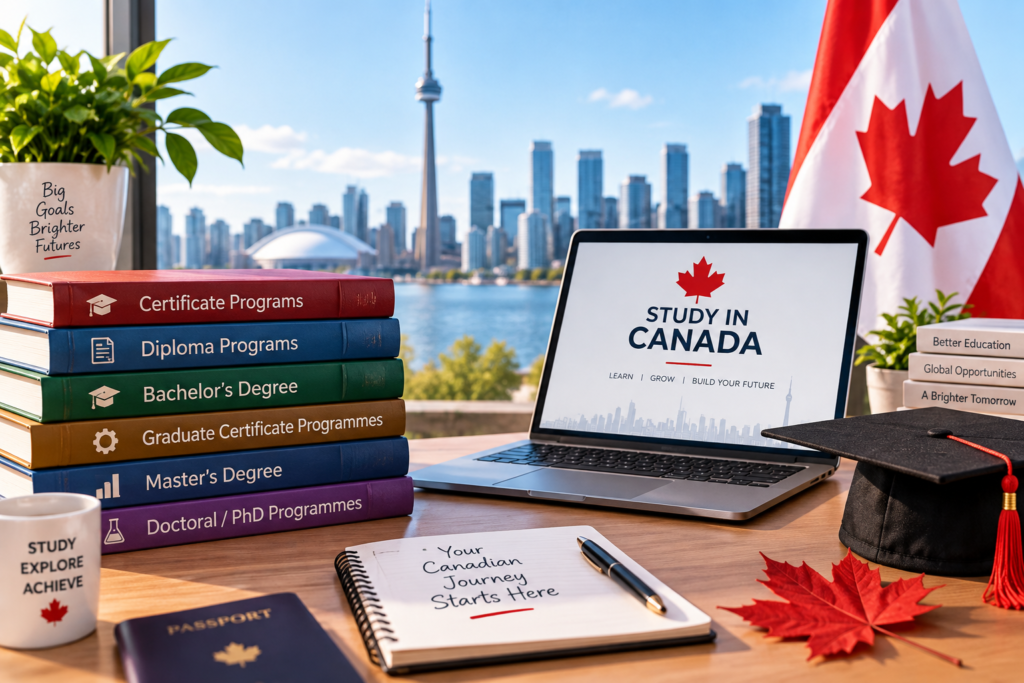
Canada offers study programs at different academic levels through universities, colleges, and other recognized post-secondary institutions. Program duration depends on the qualification, institution, and field of study.
| Study Program | Typical Duration |
|---|---|
| Certificate Programs | 1–2 years |
| Diploma Programs | 2–3 years |
| Bachelor's Degree | 3–4 years |
| Graduate Certificate Programmes | Varies by program |
| Master's Degree | 1–2 years |
| Doctoral / PhD Programmes | 3–5 years |
Program length can vary between institutions and fields. Students should always check the official duration and admission requirements of their selected program before applying.
Canada offers study options across a wide range of academic and career-focused fields. Depending on your background and career plans, you may explore programs in areas such as:
The best program is not necessarily the most popular one. Students should consider their previous education, career goals, budget, program requirements, and future plans before choosing a course.
International students can choose from different types of Canadian institutions based on their academic background, career goals, and preferred study pathway.
Choosing an institution should be based on more than tuition fees alone. Consider the following factors before making your decision:
| Factor | What to Consider |
|---|---|
| Programme | Does it match your academic background and career goals? |
| Institution | Is it a Designated Learning Institution (DLI)? |
| Program Eligibility | Does the programme meet applicable study permit and post-study requirements? |
| Location | What are the housing, transportation, and lifestyle costs? |
| Tuition | Can you comfortably plan for the total cost of your studies? |
| Admission Requirements | Do you meet the academic and language requirements? |
| Career Goals | What skills and qualifications will the program provide? |
| Post-Study Options | Is the specific program eligible for relevant post-graduation options? |
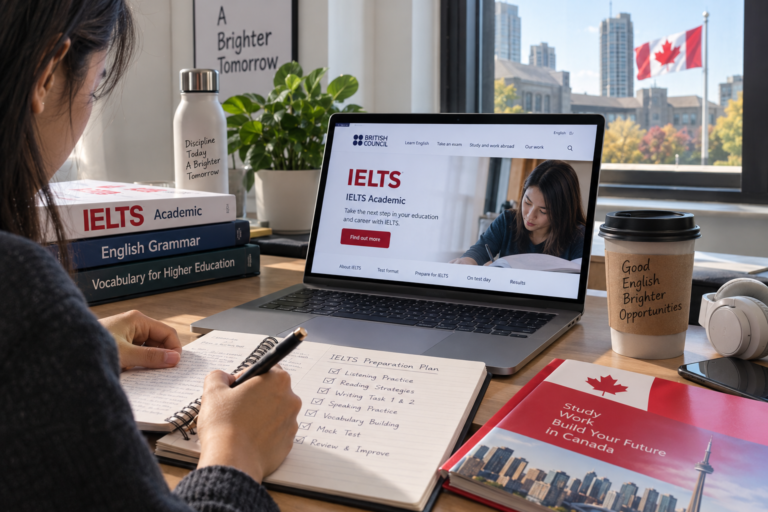
English-language requirements vary by institution, programme, and level of study. IELTS Academic is widely accepted by Canadian universities and colleges, but there is no single IELTS score for every program. Some programs may require around 6.5, while others may have different requirements. Always check the exact requirements of your selected institution and program before applying.
Identify the best fit based on your course and location preferences.
Academic transcripts & certificates, IELTS/TOEFL/PTE, SOP
Most Canada universities accept online applications
Receive Offer Letters and pay the required tuition fees to secure your place.


Living expenses in Canada vary depending on the city, accommodation type, lifestyle, and personal spending habits. International students should plan their monthly and annual living budget before choosing their study location.
Common living expenses include:
Living costs can be higher in major cities such as Toronto, Vancouver, and Montreal, particularly for accommodation. Smaller cities and communities may offer different housing and living-cost options.
Students should compare accommodation, transportation, food, and other daily expenses when choosing their institution and study location. Planning a realistic budget can help you prepare for the overall cost of studying in Canada.
The cost of studying in Canada depends on the programme, institution, location, and lifestyle. Students should consider both tuition fees and everyday living expenses when planning their study budget.
Common expenses include:
According to official EduCanada guidance, tuition fees vary by study level, programme, institution, and location. International students in college diploma programmes can expect tuition of approximately CAD 16,000–25,000 per year. Average university tuition is approximately CAD 41,746 per year for international undergraduate students and CAD 24,028 per year for international graduate students.
Students should also budget for living expenses. EduCanada currently recommends budgeting a minimum of approximately CAD 23,000 per year for living costs, with additional funds needed if family members accompany the student. Actual costs vary by location and lifestyle.
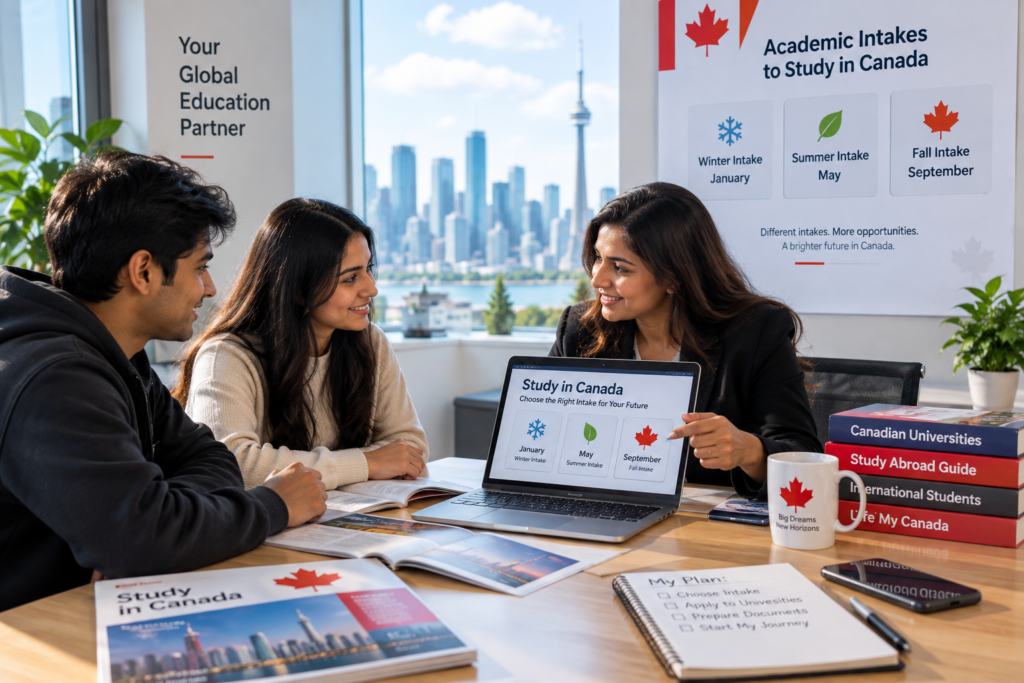
Canadian universities and colleges may offer different admission intakes throughout the year. Intake availability varies by institution, programme, and level of study.
Not every programme is available in every intake. Students should check the official intake dates, application deadlines, and programme availability of their chosen institution well in advance.
Students should start planning well before their intended intake. A good starting point is around 9–12 months before the planned start date, especially when you need time for program research, application preparation, admission, and study permit processing.
Application deadlines vary between institutions and programmes. Students should always check the official application deadline for their selected course and plan their application accordingly.
Before starting your study journey in Canada, Bangladeshi students should review their academic, financial, admission, and study permit requirements carefully.
Requirements can vary depending on the institution, program, and individual circumstances. Always check the latest requirements from your selected institution and the official Government of Canada before submitting your application.
International students may find scholarships, fellowships, grants, and other forms of financial support through Canadian institutions and government or provincial programs. Availability depends on the student's academic profile, programme, institution, and scholarship criteria.
Potential sources of financial support include:
Scholarship availability, eligibility, award amounts, and application deadlines vary between institutions and programmes. Students should check the official scholarship requirements and deadlines before applying.
Eligible international graduates may be able to apply for a Post-Graduation Work Permit (PGWP) after completing an eligible program at an eligible designated learning institution (DLI). PGWP eligibility is not automatic and depends on the graduate, institution, program, and applicable immigration requirements.
Important factors may include:
Students should check PGWP eligibility before choosing their program rather than assuming that every Canadian program provides the same post-study work opportunity. Current eligibility rules can vary by program type and study permit application date.
Get personalized support for a brighter tomorrow.Let us guide you through the journey to your goals.
Fully funded scholarships for international students are highly competitive and are not available for every programme or institution. Students may find scholarships, grants and awards offered by Canadian universities, colleges and other organisations, depending on their academic profile and eligibility.
Completing a two-year programme in Canada does not automatically qualify you for permanent residence. However, eligible graduates may later explore Canadian PR pathways depending on factors such as their education, work experience, language ability, occupation, province and the immigration programmes available at the time of application.
Eligible international students can generally work up to 24 hours per week off campus during regular academic sessions and unlimited hours during scheduled breaks, subject to current eligibility requirements.
A Letter of Acceptance is the official acceptance document issued by a Canadian educational institution after a student’s application has been approved. Most study permit applicants need an LOA from their selected DLI.
A Letter of Acceptance is the official acceptance document issued by a Canadian educational institution after a student’s application has been approved. Most study permit applicants need an LOA from their selected DLI.
Program duration varies by qualification and institution. Diploma programs commonly take around 2–3 years, bachelor’s degrees around 3–4 years, master’s degrees around 1–2 years and doctoral programs around 3–5 years.
Choosing the right Canadian course and institution can have a significant impact on your academic experience and future career plans.
Top Link Education helps students in Dhanmondi, Dhaka, Bangladesh understand their study options, compare suitable Canadian institutions, prepare applications, and navigate the study permit process.
Whether you are planning a diploma, undergraduate degree, postgraduate program, or master's degree, our team can help you understand your options and prepare for the next step.
Contact Top Link Education today for personalized Canada study abroad counselling in Dhanmondi, Dhaka, Bangladesh.
Get Canada Study Counselling